







500 Braças

arq-cul-indigenas

Atendimento à pesquisa

Esposição

Visitas em grupos

pesquisa

Pesquisa no Acervo online

MUPA Minuto

Conteúdo Virtual


Institutional Text

The 500 Braças exhibit introduces the public of the Museu Paranaense to  the work of the Irmandade Vilanismo [The Villainism Brotherhood], a collective of artists whose practices interweave artistic creation, territorial experience, and collective construction. Blurring the boundaries between what goes on inside and outside the Museum, the exhibition expands its physical and symbolic limits through the Cortejo Negro [Black Procession], held on its opening day: a collective movement that makes its way through the streets of Curitiba as a gesture of recognition of the  African presence, memory, and heritage that constitute the city, despite a history which has tried to erase them.

The year 2026 marks the 150th anniversary of the founding of the Museu Paranaense, an institution that remains in a permanent process of reflection on its role in society and on the narratives it helps to construct. Throughout this trajectory, the MUPA has sought to establish new relationships between past and present through dialogues, intersections, and rapprochement between different fields of knowledge, cultural practices, and territories. In this context, the exhibit contributes to a set of actions that expand the debates and dialogues which enrich the Museum and its current agenda of activities.

By reinterpreting the concept of 500 Braças, a land measurement established by the 1850 Land Law and historically associated with mechanisms of exclusion of Black and Indigenous populations, the Irmandade Vilanismo shapes it into poetic and political material. Carried out in conjunction with the Centro Experimental de Arte Serigráfica/Caderno Listrado, the exhibit converts a measure conceived to delimit and separate into a mechanism of rapprochement and collective construction: outstretched arms that meet to invent and sustain new territories of existence and possibility.


Review text

In 2022, while Brazil celebrated the bicentennial of Independence and the centennial of the Week of Modern Art, young Black artists from the metropolitan region of São Paulo organized a countermovement, taking the nation's official narrative as a counterpoint to imagine other political, historical, and affective horizons. Thus was born an artistic brotherhood whose name, in allusion to the many “isms” that run through our colonial and cultural history, would be Vilanismo, or Villainism.

In October of that year, marking thirty years since the Carandiru Massacre, the artists launched their counter-manifesto. In reverence to the memory of the victims of state violence, they stated: “We address the hell we live and survive, this project called Brazil, we measure its posture through our gaze and see its heart sagging under the weighty guilt of privilege”. While the memory of the bourgeois artists who in 1922 imagined themselves to be leading an “aesthetic revolution” took over the halls of the Municipal Theater, once again heroized, the brothers provocatively announced themselves as “VILLAINS, Urchins, Street Kids. We are all still classified by the Vagrancy Law”. In doing so, they forced Brazil to confront its own underside through the antagonistic mirror of VILLAINISM: a symbolic counter-coup that challenges nationalist officialdom from the perspective of those that the homeland has historically expropriated, criminalized, and exterminated.

Brought up in the rhythmic savvy of the streets, the villains do not imprison themselves in the imagery of villainism they evoke. Where one might expect a politics founded on revolt, they call forth an ethic of affection, care, and solidarity. United by the shared experience of being Black men and artists from the periphery, they build a brotherhood dedicated both to enhancing collective struggles and to reinventing contemporary masculinities. Through exhibitions, residencies, workshops, publications, and public actions, VILLAINISM has consolidated a practice in which love asserts itself as a revolutionary force.

Now, in partnership with the Caderno Listrado printmaking studio, the brotherhood occupies the MUPA with the residency-exhibition 500 BRAÇAS. The project's title refers to the territorial measure used by the 1850 Land Law to organize the commodification of Brazilian territory, consolidating a land tenure system that made any significant redistribution impossible after the abolition of slavery. By mobilizing these braças, the artists highlight one of the central axes of their work: the right to land.

Raised in favelas and peripheries, the villains know the concrete effects of the concentration of land ownership in Brazil. Confronting the never-realized reparations of the post-abolition era, they transform their artistic practice into an instrument of protest, organizing themselves around a demand that is born historic: the conquest of a collective studio floor that becomes a home to their works, encounters, and futures.

The project spreads from the museum galleries to its garden where the unprecedented intervention I am a man is installed. Bringing together works by Ayọ̀kàndé, Carinhoso, Denis Moreira, Diego Crux, Guto Oca, Rafa Black, Ramo, Renan Teles, Robson Marques, and Rodrigo Zaim, 500 BRAÇAS also constitutes a new gesture of CuradoTRETA, a project which reappropriates curatorial regimes to hack institutionalities and discourses of power. Organized into three sections — Mutirão (Collective Effort), Mente do Vilão (The Villain's Mind), and Você me deve (You Owe Me) — the exhibition extends to the museum's permanent collection, where the artists' works offer a counter-reading of the institutional narrative, bringing memory, historical critique, and political imagination into conflict.

In a context marked by the rise of fascism and the hatred it spews, VILLAINISM insists on brotherhood. Its actions are not limited to denouncing violence; instead, they invest in building sensitive and political bonds between historically marginalized subjects and their allies. By affirming encounter, care, and sharing as technologies of existence, the brotherhood inhabits the arts as a territory of collective regeneration in the face of the threat of collapse. After all, as its counter manifesto already states, “we are united by risk”.

Clarissa Diniz


arq-cul-indigenas

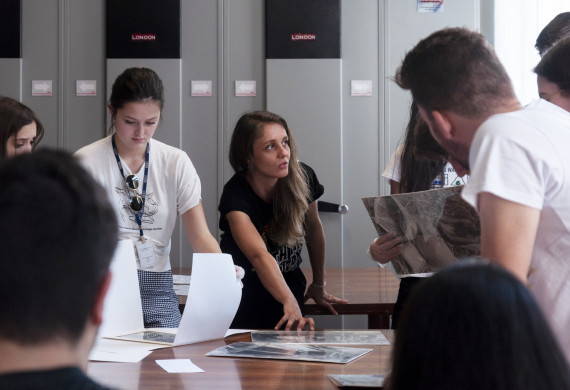
O Museu Paranaense vem incentivando a pesquisa nas áreas da arqueologia, antropologia e história. Para tanto, disponibiliza seus departamentos para consultas de pesquisadores, professores e estudantes.
 

Saiba mais

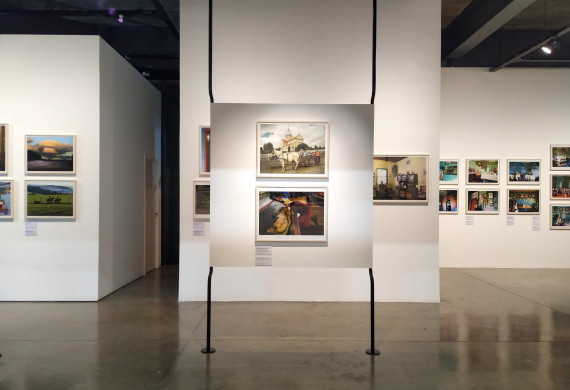
Esposição

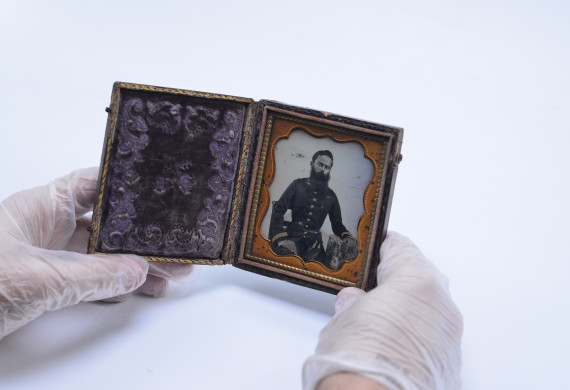
As visitas em grupos de 10 a 40 pessoas são orientadas pelo Núcleo Educativo e devem ser agendadas com antecedência.
Saiba mais

pesquisa

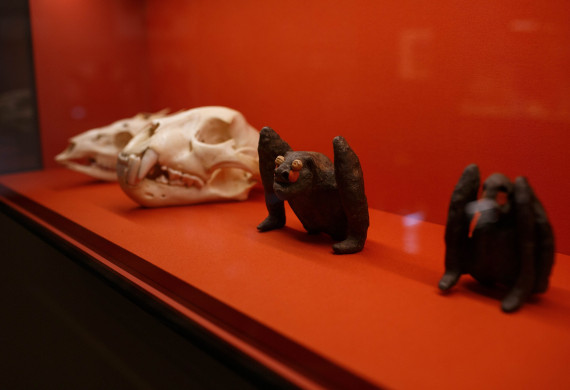
Consulte o acervo do MUPA disponível na Rede de Informação Museus Paraná.
Saiba como pesquisar

MUPA Minuto

Conheça o conteúdo virtual relacionado ao acervo, coleções e exposições do Museu Paranaense.


Confira